ADA Ramps & Compliance Work in Mooresville
ADA Ramps and Compliance Work in Mooresville, NC
Service Area and Availability for Mooresville and Surrounding Communities
We provide ADA ramp installation and compliance work throughout Mooresville, NC and the surrounding communities, including areas along Brawley School Road, South Broad Street, and Williamson Road. We also serve properties near Downtown Mooresville, the Langtree corridor, and communities extending toward Lake Norman. If you are managing a commercial property, public facility, or multifamily building in the area, we are available to come out, assess your site, and talk through what the work involves before anything gets started.
The Challenge of Keeping Up with ADA Ramp Requirements on Your Property
A lot of property owners and managers find themselves in a tough spot when it comes to accessibility ramps. Maybe you have received a complaint, you are preparing for an inspection, or you just know that your current entry setup does not meet current standards. The question of what are ADA ramps and what they actually require can feel complicated, especially when you are looking at an older property that was never designed with disability access in mind. Ramps that are too steep, too narrow, missing proper landings, or lacking detectable warning panels can put you at risk for fines or legal issues under Title III ADA or related compliance regulations. We have spent over 10 years working on concrete projects in Mooresville, and we understand how quickly a simple-looking ramp project can get complicated once you dig into the actual requirements.
Local Knowledge: How Mooresville's Climate, Soil, and Property Types Affect Compliance Work
Working in the Piedmont region of North Carolina means we deal with conditions that directly affect how ramps are built and how long they last. The red clay soil common throughout Mooresville and Iredell County can shift and settle over time, which is one reason we take base preparation seriously. We typically work with a minimum 4-inch compacted base and reinforced concrete to give the slab the support it needs under our local soil conditions. Freeze and thaw cycles during winter months can also work against concrete that was not poured or finished correctly, so we pay close attention to curing and sealing. We have worked on properties near the Charles Mack Citizens Center, along West Iredell Avenue, and near the Mooresville Historic Downtown, where older building footprints and existing pavement create real constraints for ramp installation. Properties near Lake Norman Regional Medical Center and along busier corridors like NC-150 often involve tighter site conditions and coordination with the Town of Mooresville Inspections Department for permitting. Knowing this area means we can anticipate those challenges before they slow your project down.
Frequently Asked Questions About ADA Ramp Work in Mooresville, NC
Do I need a permit for ADA ramp work in Mooresville?
Most ramp installations or significant modifications on commercial and public properties will require a permit through the Town of Mooresville Building Permits Office. We handle the coordination with the permitting process so you are not left figuring that out on your own.
How long does a typical ramp project take?
Most ramp projects take anywhere from one to three days of active work, depending on site conditions, the scope of the ramp, and whether existing concrete needs to be removed first. Weather and permit timelines can also affect the schedule.
What standards govern this type of work?
ADA ramp work is guided by the ADA Standards for Accessible Design, the North Carolina State Building Code, and in some cases PROWAG for public right-of-way work. We build to these standards on every project.
Can you repair an existing ramp instead of replacing it?
Sometimes, yes. If the slope, width, and landing dimensions are workable but the surface is damaged or curb cuts are missing, repairs or additions may bring it into compliance without a full replacement. We assess each situation individually.
Understanding what goes into a compliant ramp is the first step. Next, we will walk through exactly what the concrete work itself needs to include to meet current ADA standards and keep your property on the right side of the code.
What Makes a Concrete Ramp ADA Compliant
Key Measurements and Design Standards Your Ramp Must Meet
When we build ADA ramps in Mooresville, the first thing we look at is whether the design meets the ADA Standards for Accessible Design. These are not suggestions. They are the minimum requirements your ramp must hit to pass inspection and hold up to scrutiny from regulators or legal review. For most ramps, that means a 1:12 slope ratio, a 36-inch minimum clear width, and a 60-inch landing at the top and bottom. Cross slopes cannot exceed 2%, which is something we verify with a digital level on every pour.
Here in the Piedmont region, red clay soil and expansive clay beneath your site can shift over time, which puts extra pressure on getting the base right. We compact the sub-base carefully and typically pour 4000 PSI reinforced concrete at a 6-inch slab thickness to give the ramp the structural strength it needs to stay level for years.
For projects near Downtown Mooresville or along South Broad Street where curb work is involved, curb cuts also need detectable warning panels that meet federal specs, including truncated dome spacing and a 24-inch detectable warning depth. These details matter when permits are pulled through the Town of Mooresville Inspections Department.
Why Slope, Width, Landings, and Surface Texture All Matter Together
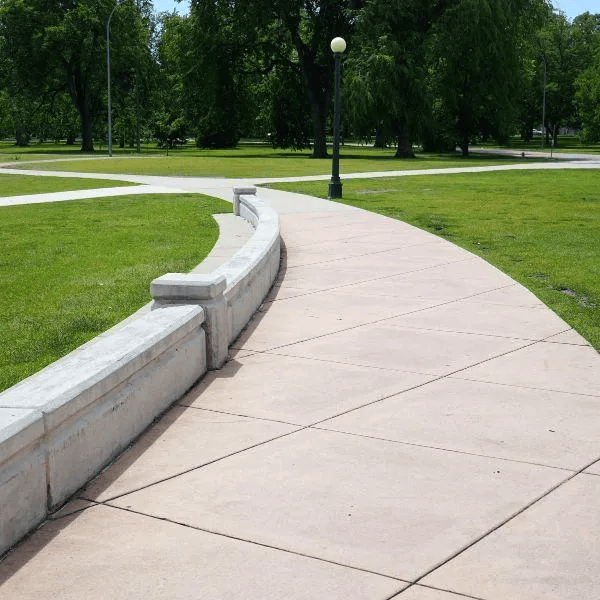
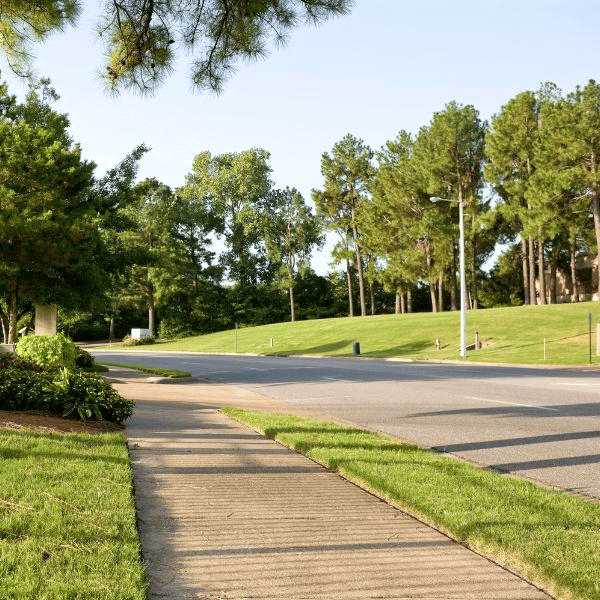
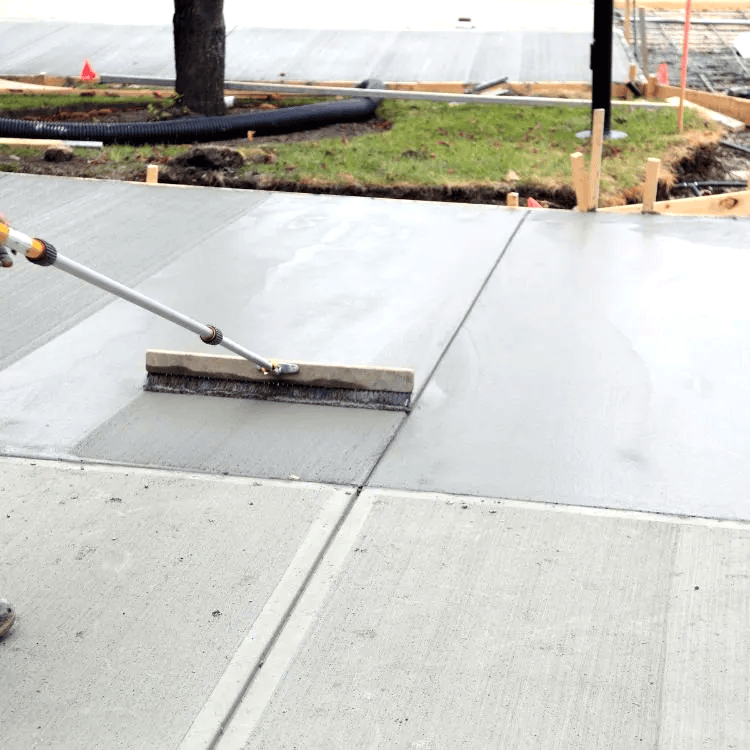
Each part of an ADA-compliant ramp works with the others. A ramp that has the right slope but a surface that is too smooth becomes a slip hazard, especially in wet weather. Broom-finished concrete is what we use most often because it gives the right amount of grip without being rough enough to create resistance for wheelchair users.
Width and landings are just as important as slope. A ramp that is too narrow or that does not have a proper landing at the turn gives a wheelchair user nowhere to rest or reposition. Under Title III ADA and the North Carolina State Building Code, commercial property compliance depends on all of these elements being right at the same time, not just one or two.
We have over 20 years of combined concrete experience and more than 10 years working on properties in Mooresville, so we know how to read a site, account for drainage, and build ramps that meet ADA guidelines without shortcuts. That foundation carries directly into the types of ramp work we take on.
Types of ADA Ramp Work We Do
When a property needs to meet ADA standards, the concrete work involved is more detailed than a standard pour. Slope, width, surface texture, and landing placement all have to be right. We have worked on commercial properties, public facilities, and multifamily sites across Mooresville for over a decade, and we understand what it takes to meet the ADA Standards for Accessible Design as well as the North Carolina State Building Code.
New Ramp Installation for Commercial Entrances and Public Facilities
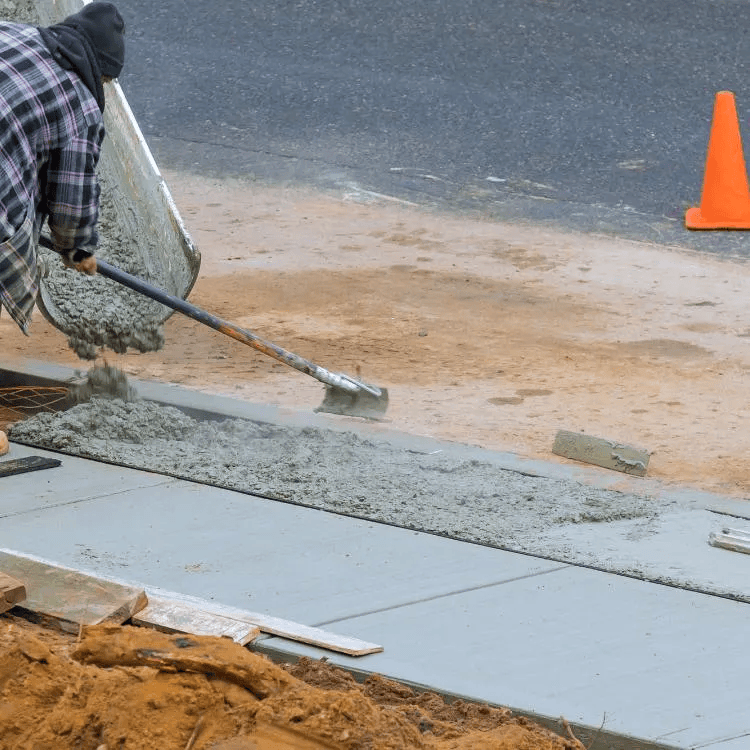
When you need ramp installation from the ground up, we plan the layout carefully before any concrete is poured. For properties along South Broad Street, West Iredell Avenue, or near the Mooresville Historic Downtown area, entrances often need to work within tight site conditions while still meeting a 1:12 slope ratio and a minimum 36-inch clear width. We use a laser level and slope meter throughout the pour to stay within spec. A 60-inch landing at the top and bottom of the ramp is required under ADA guidelines, and we build those into the design from the start. For most installations, we work with 4000 PSI reinforced concrete and a broom-finished surface to meet both durability and traction requirements. Before we break ground, we coordinate with the Town of Mooresville Inspections Department to pull the right permits and confirm local requirements.
Curb Ramp Construction and Sidewalk Accessibility Upgrades
Curb cuts are one of the most common accessibility needs we see on commercial and public properties around Mooresville. A properly built curb ramp supports wheelchair accessibility and general pedestrian safety, but it has to be done right. The cross slope cannot exceed 2%, and the running slope must stay within code. We install detectable warning panels, including truncated dome panels that meet PROWAG requirements, at the base of curb ramps to alert people with visual impairments. The Piedmont region's red clay soil and weathered granite base conditions here in Iredell County require solid subgrade preparation, so we compact the base thoroughly before forming and pouring. Skipping that step leads to cracking and settlement, which means the ramp fails both physically and from a compliance standpoint.
Ramp Repairs and Modifications to Bring Existing Concrete Up to Code
Older ramps on commercial properties often fall short of current compliance regulations in ways that are not immediately obvious. A slope that was acceptable under older standards may not meet today's requirements. Surface texture can wear down over time, removing the skid resistance that ADA ramps depend on. Landings may be undersized, or the ramp width may be too narrow for current code. We assess what you have, identify what needs to change, and handle the concrete work needed to bring it into compliance. In some cases, a partial repair is enough. In others, a full replacement is the more practical and cost-effective path. Either way, we give you an honest read on the condition before any work begins.
Once the ramp itself is built to spec, the surrounding elements have to match the same standard. Handrails, landings, and surface requirements each carry their own set of rules under the ADA Standards for Accessible Design, and getting those details right is just as important as the ramp slope itself.
A few years back, we took on an ADA ramp project for a small business owner here in Mooresville, right off Brawley School Road. At first glance, it looked like a straightforward job. We were set to pour a compliant ramp with the right slope, width, and detectable warning surfaces. Then we started digging.
About six inches down, we hit an old utility line that wasn't on any of the maps the property owner had. It ran right through the planned footprint of the ramp. That meant we had to stop work, call the utility company, and wait for them to come out and mark everything properly. That process alone added several days to the project timeline.
Once we knew what we were working around, we had to redesign the ramp layout so it met ADA slope requirements without disturbing the line. ADA guidelines are strict about cross slopes and running slopes, so we couldn't just shift the ramp over and call it a day. We had to rethink the grading and adjust the landing area so everything stayed within the required measurements.
We also ran into a drainage issue after the redesign. The new layout was directing water toward the building entrance, which would have created a safety problem for anyone using the ramp. We brought in extra fill material and regraded the surrounding area to move water away from the ramp entirely.
In the end, the ramp passed inspection and the business owner was able to serve all of her customers safely and legally. It took longer than expected, but with over 20 years of combined concrete experience and more than 10 years working right here in Mooresville, we knew how to work through each problem as it came up. That kind of hands-on experience is what helps you get a solid result even when a job doesn't go according to plan.
Handrails, Landings, and Surface Requirements
Building an ADA-compliant ramp involves more than getting the slope right. The handrails, landings, and surface finish all have to meet specific requirements under the ADA Standards for Accessible Design. We work through each of these details carefully on every ramp we build in Mooresville, and understanding what goes into them can help you plan your project more clearly.
When Handrails Are Required and What the Specs Look Like
Under ADA guidelines, handrails are required on both sides of a ramp when the rise exceeds 6 inches. The gripping surface must be between 1.25 and 2 inches in diameter and mounted between 34 and 38 inches above the ramp surface. Handrails also need to extend 12 inches horizontally beyond the top landing and slope down to a point 12 inches past the bottom of the ramp run. The ends have to be returned or rounded so they do not create a snag hazard. We use a slope meter and measuring tools to confirm placement is accurate before any concrete is poured around the post anchors.
Landing Size and Placement Rules That Affect Your Ramp Design
Landings serve as rest points and turning areas along a ramp route. The ADA Standards for Accessible Design require a minimum 60-inch landing at the top and bottom of every ramp run. If the ramp changes direction, a 60-inch by 60-inch landing is needed at that turn. Landings also cannot exceed a 2% cross slope in any direction. This affects how we grade the surrounding area and tie the ramp into existing walkways or entry points. In Mooresville, where red clay soil and Piedmont region ground conditions can shift with weather and moisture, we pay close attention to how the subbase is prepared to keep landings stable and properly pitched over time.
Surface Finish Options That Meet Slip Resistance Requirements
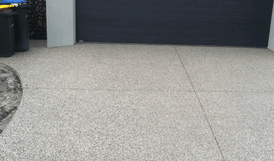
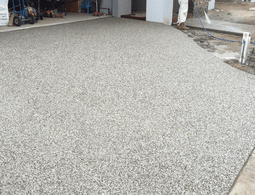
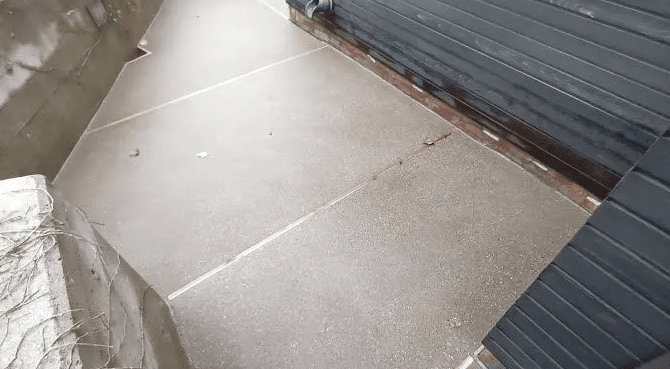
The ADA does not assign a specific coefficient of friction number, but it does require that ramp surfaces be stable, firm, and slip resistant. In practice, a broom finish applied to 4000 PSI concrete is one of the most reliable ways to meet that standard. The broom texture adds grip without creating edges that could catch a wheelchair wheel or walker tip. Exposed aggregate concrete is another option that works well in outdoor settings. Where a ramp meets a street or parking area, detectable warning panels with truncated domes are required under PROWAG and the ADAAG to alert people with visual impairments that they are entering a vehicular zone. We source these panels to meet the 1.5-inch dome height and 2.35-inch center spacing specs required by current standards.
Once the physical elements of your ramp are designed and built to code, the next step is making sure the project is reviewed and approved through the right channels. That means working with local permit and inspection offices to get the work documented and signed off properly.
Permits and Inspections for ADA Ramp Projects in Mooresville
Most ADA ramp projects in Mooresville require a permit before work begins. Whether you own a commercial property along South Broad Street, manage a public facility near Downtown Mooresville, or oversee a multifamily development in an area like Langtree, the permitting process is a standard part of getting the work done right. We have over 10 years of experience working in Mooresville, so we know what the Town of Mooresville Inspections Department and Iredell County Building Inspections typically expect to see.
What the Permitting Process Typically Looks Like for This Type of Work
For most accessibility ramp projects, we start by preparing documentation that outlines the scope of work. This includes proposed dimensions, the 1:12 slope ratio, landing sizes, and surface materials like broom-finished concrete. Drawings typically need to show that the design meets the ADA Standards for Accessible Design as well as the North Carolina State Building Code. Once submitted to the Town of Mooresville Building Permits Office, the review process moves through their standard queue. Larger projects tied to public building accessibility may also involve review under Title II or Title III ADA requirements depending on the property type.
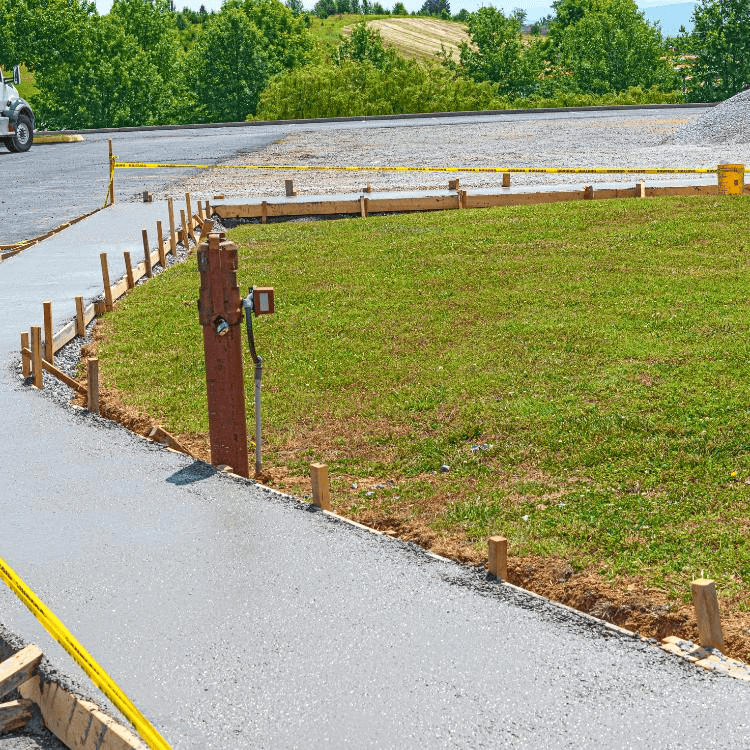
Mooresville sits in the North Carolina Piedmont region, where red clay soil and expansive clay can affect how a base is prepared. We account for that during the planning stage so the foundation under your ramp is properly compacted and stable before concrete is ever poured. Using reinforced concrete at 4000 PSI and a 6-inch slab thickness on a 4-inch compacted base helps prevent settlement and cracking that can lead to failed inspections later.
How We Help You Stay on Track with Local Inspections and Code Reviews
Once a permit is issued, inspections are scheduled at key stages of the build. We coordinate those directly, so you are not left managing back-and-forth with inspectors on your own. Our team uses a laser level and slope meter throughout the pour to verify that slope requirements stay within the 2% cross slope maximum and that landings meet the 60-inch minimum. Detectable warning panels are installed to meet depth and dome spacing specs required under PROWAG and local code.
If corrections come up during a review, we address them before the next inspection stage. That keeps your project moving without unnecessary delays or added costs from rework. We have built working relationships with local permit offices and understand how the process flows for commercial property compliance projects in this area.
Understanding who is responsible for meeting these requirements is just as important as the permitting process itself. The type of property you own or manage plays a direct role in what ADA standards apply to you and when upgrades become necessary.
Who Needs ADA Compliant Ramps
If your property serves the public in any way, there is a good chance you are required to provide wheelchair accessibility and barrier-free pathways under federal and state law. The ADA Standards for Accessible Design, along with the North Carolina State Building Code, set clear expectations for how entrances, walkways, and curb cuts must be built and maintained. Whether you are building new or upgrading an existing property, getting the concrete work right from the start saves you from costly corrections later.
Commercial Property Owners and Business Operators
Under Title III ADA, most businesses open to the public are required to provide accessible routes to their entrances. This includes retail shops, restaurants, offices, and any facility along corridors like South Broad Street or Mooresville Gateway Boulevard. We work with commercial property owners to install ADA ramps that meet the 1:12 slope ratio, 36-inch minimum clear width, and 60-inch landing requirements. We also install detectable warning panels at curb transitions, which are required at most commercial curb cuts. Skipping these details can lead to failed inspections through the Town of Mooresville Inspections Department or complaints under compliance regulations.
Multifamily Housing and Apartment Communities
Apartment complexes and multifamily developments are subject to both Title II ADA requirements and fair housing accessibility standards depending on the number of units and whether the property receives federal funding. Communities around areas like Atwater Landing or Langtree often include accessible parking, shared entrances, and pedestrian routes that must meet a 2% cross slope maximum and proper surface texture. Broom-finished concrete is a common choice here because it provides a slip-resistant surface that holds up well in the Piedmont region's red clay soil conditions, which can shift and settle over time if the base is not properly prepared.
Public Facilities, Churches, and Nonprofit Organizations
Public buildings and facilities that serve the community, including churches, libraries, and nonprofits, are often required to meet disability access standards under Title II ADA or Section 504 of the Rehabilitation Act. Properties near places like the Charles Mack Citizens Center or Mooresville Public Library area see regular foot traffic from people of all ages and abilities. We have worked on accessibility ramps and accessible routes for facilities throughout Mooresville, installing reinforced concrete to a 4000 PSI mix with a 4-inch compacted base to handle both traffic loads and the area's expansive clay soils. Applying universal design principles from the beginning means fewer retrofits down the road and a safer, more welcoming entry for everyone who visits your property.
No matter what type of property you own or manage, working with a contractor who understands local permitting, current ADA guidelines, and the specific ground conditions in Mooresville makes a real difference in how the finished work holds up over time.
Mooresville Concrete Contractor With 20 Years Experience
We are a concrete contractor based in Mooresville, NC, and we have been working on concrete projects in this area for over 10 years. Our team brings more than 20 years of combined experience pouring and finishing concrete, so we have seen just about every type of project and site condition you can run into in the Lake Norman area.
Mooresville sits in a region where the soil, clay content, and seasonal weather all affect how concrete performs over time. We work here every day, so we understand what it takes to prepare a site properly, choose the right concrete mix, and finish a surface that holds up through hot summers, wet winters, and everything in between. That local knowledge makes a real difference in how a finished project performs over the years.
We handle a wide range of concrete work for both residential and commercial properties. That includes driveways, patios, walkways, garage floors, foundations, retaining walls, pool decks, stamped and decorative concrete, concrete repair, resurfacing, and more. Whether you have a straightforward slab or a more detailed structural project, we approach every job with the same care and attention to detail.
Good concrete work starts long before the pour. We focus on proper grading, base preparation, drainage, and reinforcement on every project. Getting those steps right is what separates concrete that lasts from concrete that cracks, settles, or causes drainage problems down the road.
When you reach out to us, you are working with a local crew that knows Mooresville, understands the building requirements in the area, and takes the quality of the finished work seriously. We are straightforward about what a project involves, what it will take to do it right, and what you can expect from start to finish.
Why Work With Us for ADA Compliance Concrete in Mooresville
Our Experience With Code-Compliant Concrete Work in the Mooresville Area
We have over 20 years of combined experience pouring concrete, and more than 10 of those years have been spent working on projects right here in Mooresville. That means we understand the local conditions, including the red clay soil common to the Piedmont region, which can shift and settle under a slab if the base is not prepared correctly. We also work regularly with the Town of Mooresville Inspections Department and are familiar with what local permits require for accessibility ramps and related concrete work.
When it comes to ADA standards and commercial property compliance, the details matter. A ramp that is too steep, too narrow, or missing proper landings can fail inspection and put your property at legal risk. We build to the ADA Standards for Accessible Design and the North Carolina State Building Code, using specs like the 1:12 slope ratio, a 36-inch minimum clear width, and detectable warning panels where required. Whether you need curb cuts along a sidewalk on South Broad Street or a full ramp installation at a property near the Mooresville Historic Downtown, we know how to build it right the first time.
How We Approach Each Project to Reduce Your Risk and Get the Work Done Right
Before we pour anything, we take time to assess your site, review what ADA guidelines apply to your specific property type, and talk through the scope of work with you. For commercial properties subject to Title III ADA or public facilities under Title II ADA, the requirements can differ, and we make sure you understand what applies to your situation.
We use a laser level and slope meter throughout the forming and finishing process to confirm that slope requirements stay within the 2% cross slope maximum and that landings meet the 60-inch minimum. We pour 4000 PSI reinforced concrete on a properly compacted base, finish it with a broom texture for traction, and apply a curing compound to protect the surface as it sets. Where needed, we install truncated dome panels that meet PROWAG requirements for wheelchair accessibility and mobility assistance.
Every project we take on is treated as a compliance project, not just a concrete job. That approach protects you from failed inspections, reduces liability, and means you are not paying to fix the same work twice. When you are ready to move forward, we make it straightforward to get your ADA ramp project started.
Get Started on Your ADA Ramp Project in Mooresville
If your property needs accessibility ramps that meet current ADA standards, you are already in the right place. We have spent over a decade working on concrete projects across Mooresville, and we understand what it takes to build ramps that pass inspection, hold up over time, and actually serve the people who use them every day.
What to Expect When You Reach Out to Us
When you contact us, we keep things simple. We listen to what you need, take a look at your property, and give you a clear picture of the work involved. Whether you are dealing with an entry ramp off South Broad Street, a curb cut near a commercial property on Brawley School Road, or an accessible walkway at a multifamily building anywhere in the area, we show up prepared and ready to talk through your options honestly.
We will review your site conditions, discuss relevant requirements under the North Carolina State Building Code and ADA guidelines, and help you understand what permits may be needed through the Town of Mooresville Inspections Department. You will not be left guessing about the process.
Next Steps for Getting Your Property Into Compliance
Here is a quick look at what you get when you choose us for your ADA ramp project:
- A contractor with over 20 years of combined concrete experience and more than 10 years working right here in Mooresville
- Ramps built to the correct slope requirements, including the standard 1:12 slope ratio and 36-inch minimum clear width
- Proper landings, edge protection, and wheelchair accessibility features that meet current compliance regulations
- Use of quality materials like 4000 PSI reinforced concrete and detectable warning panels installed to code
- Knowledge of local soil conditions in the Piedmont region, including the red clay soil common throughout Mooresville, that can affect base preparation and long-term stability
- Accurate grading and drainage planning to prevent standing water, cracking, and settlement
- Support through the permitting process with the Town of Mooresville Building Permits Office
- Work that reduces your exposure to fines, complaints, and liability tied to commercial property compliance
- A finished product that looks professional and functions the way it should for years to come
Getting your property into compliance does not have to be stressful. We are here to make the process straightforward, from the first conversation to the final walkthrough. Fill out the form below or give us a call today to get your free quote and take the first step toward a safer, more accessible property.
Mooresville Concrete Pros
142 S Cardigan Way
Mooresville, NC 28117
Business Hours
| Mon | 8:00 AM – 7:00 PM |
| Tue | 8:00 AM – 7:00 PM |
| Wed | 8:00 AM – 7:00 PM |
| Thu | 8:00 AM – 7:00 PM |
| Fri | 8:00 AM – 7:00 PM |
| Sat | 9:00 AM – 5:00 PM |